


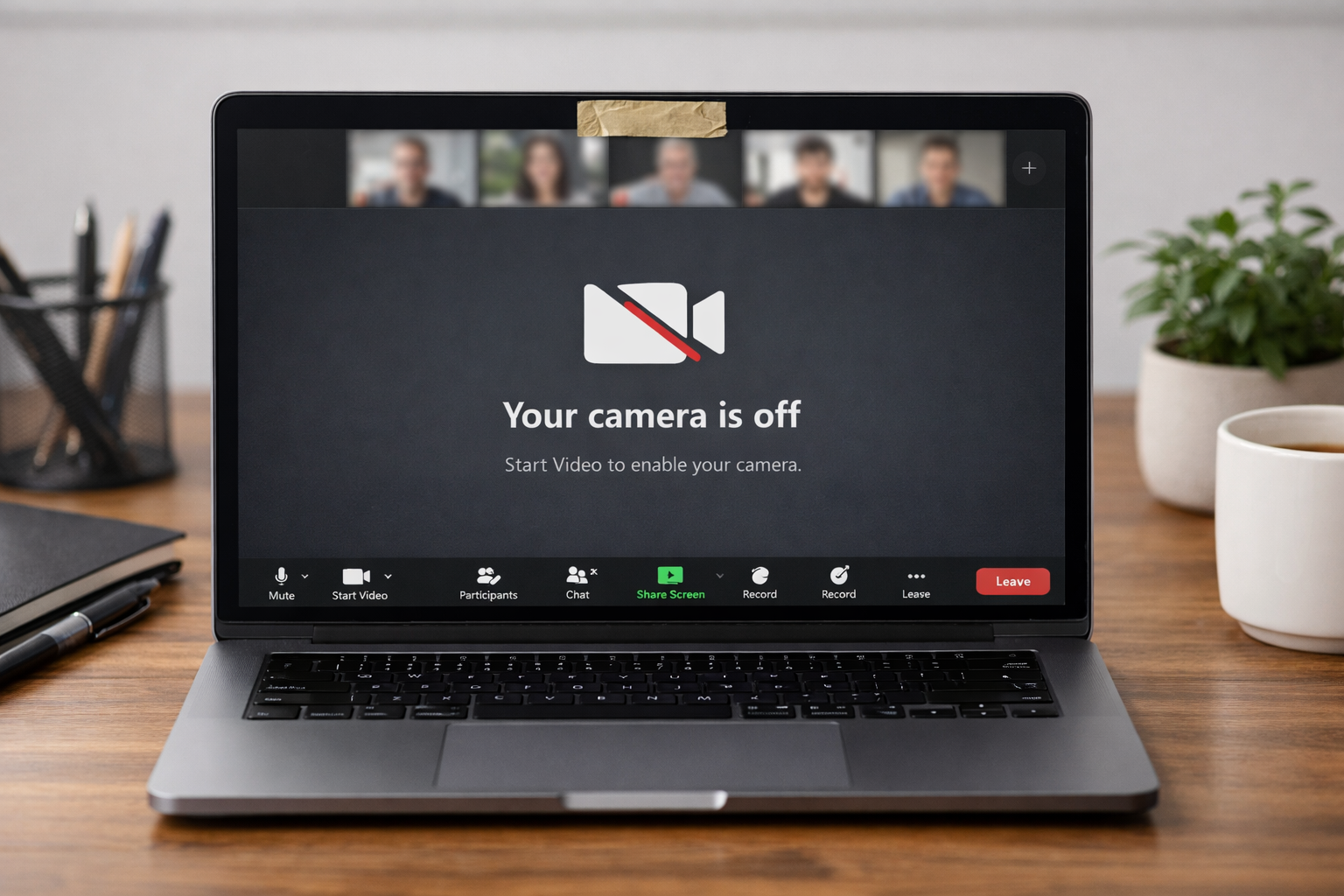
A worker didn’t turn on her camera during a job interview with Capital Power Corporation in September 2021. She had her reasons — a malfunctioning camera, a swollen eye from a medical condition, no advance notice from HR that video was expected. Fair enough.
But when she didn’t get the senior advisor position she was after, and the job went to a younger candidate with a master’s degree in economics, she decided the camera issue was discrimination. The interviewer’s comment — “I showed you what I looked like, why did you not show me what you look like?” — became, in her telling, evidence of harassment and proof the decision was based on appearance rather than qualifications.
The Alberta Human Rights Tribunal didn’t buy it. In a recent ruling, it upheld the dismissal of her complaints, finding no reasonable prospect that her age, gender, race, or disability played any role in the hiring decision. The successful candidate simply had better credentials for the role.
But here’s what lingers after reading this case: we’ve created a workplace culture so anxious about getting things wrong that even the most reasonable requests can be recast as violations.
Ask someone to turn on their camera? That’s harassment.
Hire the candidate with the graduate degree and specialized experience? That’s discrimination.
Decide you can’t accommodate an employee who refuses to work with 13 of her colleagues spread across five of your six departments? That’s failure to accommodate.
We are, it seems, one awkward Zoom moment away from a human rights complaint.
Now, before anyone accuses me of minimizing legitimate workplace discrimination — don’t. Real harassment happens. Real discrimination happens. Real failures to accommodate happen, and they deserve serious investigation and consequences.
But this case reveals something else: a growing confusion about what constitutes professional conduct in hiring, and a willingness to interpret every uncomfortable interaction through the lens of grievance.
Is visibility negotiable in an interview?
Let’s start with the camera.
If this interview had been conducted in person — which, pre-pandemic, it certainly would have been — the worker would have been visible to the hiring panel. No one would have suggested that expecting her physical presence was discriminatory. She would have shown up, swollen eye and all, and explained if necessary. The employer would have seen her, assessed her presentation and communication style alongside her qualifications, and made a decision.
But because the interview moved online, suddenly the expectation of visibility became negotiable, then optional, then — in her framing — potentially harassing.
This is where we’ve gotten tangled up. The shift to remote and hybrid work has introduced flexibility that’s genuinely valuable. But it’s also created an environment where basic professional norms are being renegotiated in real time, and not always with common sense as the guide.
Asking someone to turn on their camera during a job interview is not heavy-handed. It’s not an invasion of privacy. It’s not ableist or ageist or any other -ist. It’s the video equivalent of showing up.
Reasonable accommodations
Yes, there are legitimate reasons someone might need accommodation around video — certain disabilities, inadequate internet, caregiving responsibilities that make a quiet, camera-ready space impossible. And good employers should be flexible when those reasons are communicated.
But the worker didn’t ask for accommodation. She didn’t explain her situation in advance. She simply didn’t turn on her camera, and when the interviewer noted the asymmetry — he was visible, she wasn’t — she later reframed his comment as harassment with sexual overtones.
The tribunal saw through this. It found the comment was made “in response to the complainant not having her camera on” and that “there is no information to support that this comment was made in a sexual manner.”
Translation: sometimes a question is just a question.
Case unravels
The rest of the case unraveled in similar fashion. The worker claimed she was the most qualified candidate, but the record showed the successful applicant had education and experience she lacked. She alleged bullying and harassment, but seven audio recordings she secretly made of workplace conversations revealed only “significant interpersonal conflicts” — not discrimination.
She demanded accommodation in the form of not working with 13 colleagues spread across nearly every department in her division, a restriction the tribunal rightly recognized as unworkable. Capital Power couldn’t eliminate contact with 13 people without suffering undue hardship. The company encouraged her to apply for long-term disability benefits instead. She resigned.
Finding the obvious
What strikes me most about this case isn’t that the complaints were dismissed. It’s that they were filed at all, and that an entire tribunal process was required to confirm what should have been obvious: hiring decisions are allowed to be based on qualifications, and employers are allowed to expect candidates to be visible during interviews.
We’ve spent the past few years rightfully examining power imbalances in the workplace, calling out bad behaviour that was previously tolerated, and expanding our understanding of what accommodation and inclusion really mean.
But somewhere along the way, we’ve also created space for people to weaponize that language — to take legitimate concepts like harassment and discrimination and stretch them to cover ordinary workplace interactions that simply didn’t go their way.
A real danger in frivolous complaints
The danger isn’t just the burden on employers navigating this minefield. It’s that frivolous complaints like these make it harder to take serious ones seriously. Every case like this gives ammunition to those who dismiss workplace discrimination as overblown grievance culture. Every tribunal decision that has to explain why asking someone to turn on their camera isn’t harassment is time and resources diverted from addressing actual harm.
Recruitment and selection processes are fraught with danger, yes. But not because reasonable expectations have become unreasonable. Because we’ve lost sight of what reasonable means.
Turn on your camera. Show up prepared. Accept that sometimes the other candidate was simply better qualified. And save the human rights complaints for actual human rights violations.