


By Kelly Geraldine Malone
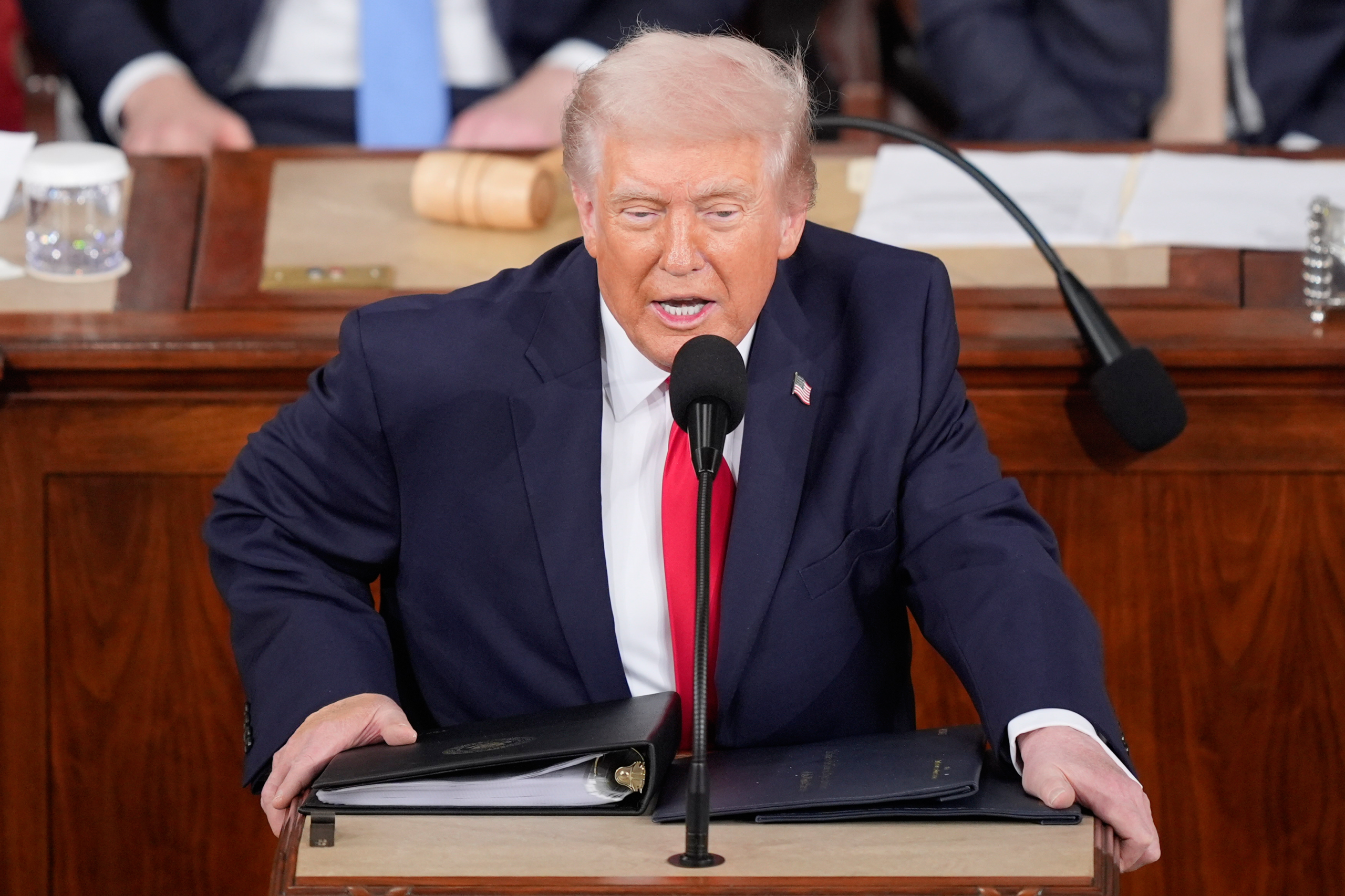
U.S. President Donald Trump remained committed to realigning global trade through tariffs in his annual state of the union address on Tuesday, days after the United States Supreme Court struck down his levy powers.
Trump stood before Congress and some of the Supreme Court Justices, who were in attendance, calling the ruling “very unfortunate.” The president said he will use new tariff tools and insisted he won’t need Congressional approval.
“Tariffs paid for by foreign countries will, like in the past, substantially replace the modern day system of income tax,” Trump said.
In a 6-3 decision Friday, America’s top court concluded it was not legal for Trump to use the International Emergency Economic Powers Act, better known as IEEPA, for his “Liberation Day” tariffs and fentanyl-related duties on Canada, Mexico and China.
Trump signed an executive order hours later to enact a 10 per cent worldwide tariff using Section 122 of the 1974 Trade Act. The next day, Trump said he would be increasing the duty to 15 per cent — although no amendment to the executive order has been signed to put that into force.
Under Section 122, the tariff cannot go higher than 15 per cent, and it will expire after 150 days unless Congress votes to extend it. It does not apply to goods compliant under the Canada-U.S.-Mexico Agreement on trade.
Trump is making the speech at a critical moment as his trade and immigration agendas have stumbled lately in the face of legal setbacks and grim polling.
The president opened the speech by declaring, “Our nation is back.”
“We have achieved a transformation like no one has ever seen before,” Trump said.
The 108-minute speech broke his own record for longest presidential address to Congress. The previous longest was his 100-minute speech last year.
It marks Trump’s sixth speech before Congress since he was first elected president.
Aaron Kall, director of debate for the University of Michigan, said Trump’s speeches have offered “a mixed bag in terms of the tone” — sombre and unifying at one moment, aggressive and insulting the next.
Kall pointed out that this year’s state of the union speech lands when the Republican party is on shaky ground with voters — and with midterm elections less than nine months away.
Recent polling has shown Trump’s approval rating plummeting among the independent voters who played a key role in handing him the White House in 2024. The president is under water on domestic issues like immigration, the economy and jobs — previously areas of strength for Trump, Kall said.
Some have suggested the president has not been able to communicate effectively with Americans on the key issue of affordability. Trump has repeatedly called the issue a Democrat “hoax” and has insisted that prices are coming down — whether or not voters themselves feel it.
Trump stayed on message — and on teleprompter — Tuesday, more than he has in recent months.
He used well-known talking points, including claims that the price of eggs and beef is dropping. Trump also mentioned his administration’s plans for housing and health care.
Trump, however, defended his immigration policies, chastising Democrats for not standing up in applause.
He made denigrating comments about people of Somali descent, which is the justification he used for ramping up controversial deportation efforts in Minneapolis.
In the Democrats’ response to the speech, Virginia Gov. Abigail Spanberger, who last year won after a campaign based on affordability, criticized the president for his “reckless trade policies” that have left everyday Americans paying the price.
Trump’s speech will set the tone for the upcoming midterm elections and give insight into Trump’s plans for the next three years of his presidency.
In his 2025 inaugural address, Trump vowed that the United States would “flourish and be respected again all over the world.”
In the whirlwind year that followed, Trump’s aggressive, rapidly changing agenda shattered alliances, upended global trade patterns, and challenged America’s foundational system of checks and balances.
Trump said Tuesday that “America is respected again, perhaps like never before.”
The president’s tariffs and repeated threats of annexation have damaged the long-standing relationship between Canada and the United States. Canada came up briefly during the speech when Trump honoured the United States’ men’s Olympic team for their gold medal win on Sunday.
“They beat a fantastic Canadian team in overtime,” he said.
Trump said he would give Connor Hellebuyck, who is the goalie for the National Hockey League’s Winnipeg Jets, the presidential medal of freedom for his performance in the game.
Also hanging over the Congressional address is the U.S. military buildup near Iran. While Trump ran on a promise to end U.S. military interventions abroad, his second term has seen an expansion of such operations with attacks on Iran, Syria, Yemen, Iraq, Nigeria, Somalia and Venezuela, along with the controversial campaign of bombing alleged drug boats in the Caribbean.
Trump defended his foreign interventions, boasting about people not going fishing in the Caribbean and taking oil from Venezuela. Trump also said he’d rather use diplomacy with Iran, without taking military action off the table.
“No nation should ever doubt America’s resolve. We have the most powerful military on earth,” the president said.
This report by The Canadian Press was first published Feb. 24, 2026.
— With files from The Associated Press


