


Home FeaturedWhat’s in B.C.’s budget for employers? Tax credits, skilled trades training, and more

What’s in B.C.’s budget for employers? Tax credits, skilled trades training, and more

by Todd Humber
A+A-
Reset

British Columbia’s 2026 budget allocates $283 million over three years to expand skilled trades training, aiming to double apprenticeship seats by 2028-29 as the province faces a $13.3 billion deficit.

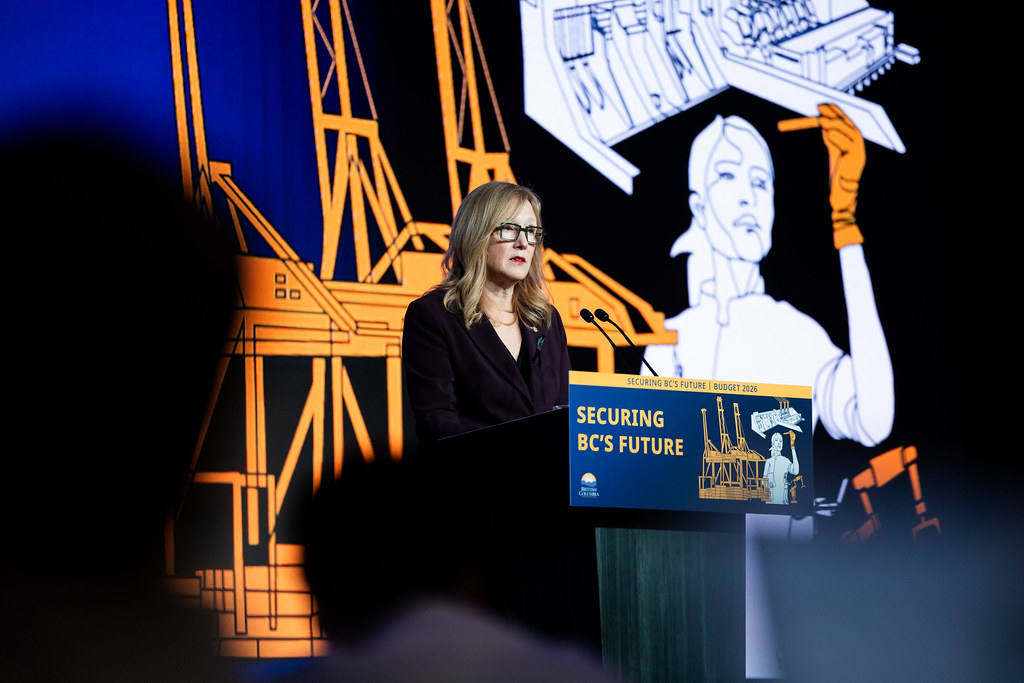
The funding will expand spaces in in-demand trades programs, increase per-seat funding to training centres, and enhance the B.C. Employer Training Grant, Finance Minister Brenda Bailey announced Tuesday.

The province projects declining deficits over three years, from $13.3 billion in 2026-27 to $11.4 billion in 2028-29, according to the fiscal plan released Tuesday.

Skills training investments

The skills training package includes $241 million to double skilled trades funding over three years and $12 million to enhance the employer training grant program.

An additional $30 million will train professionals in specialized streams including engineering, geology, computer science, biology and aerospace.

The investments aim to address labour shortages in sectors critical to B.C.’s economy, according to the budget documents.

New tax credit for manufacturers

Budget 2026 introduces a temporary 15 per cent Manufacturing and Processing Investment Tax Credit for businesses investing in new buildings, machinery and equipment.

The refundable tax credit is designed to help businesses become more productive and competitive, according to the province.

The budget also extends the Shipbuilding and Ship Repair Industry Tax Credit until the end of 2027 to support B.C.’s maritime sector.

Public sector workforce reductions

The province plans to reduce the public sector by 15,000 full-time-equivalent positions over three years while protecting front-line services in health care and education.

The B.C. Public Service, which includes core government ministry employees, will be reduced by 2,500 positions by the end of the fiscal plan, largely through attrition and voluntary departures.

The province will develop specific targets to reduce executive positions, focusing on Crown corporations and the health sector.

Child care system changes

Budget 2026 provides a $330 million increase to ChildCareBC to maintain lower fees and existing spaces.

During a stabilization period, the province will pause enrolment of new providers into the Operating Funding Model and the $10 a Day ChildCareBC program. Families and providers currently in the program will see no changes.

The budget includes $25 million to expand before- and after-school care on school grounds.

Education funding

The budget allocates $634 million in new funding for K-12 education over three years, including $167 million for the Classroom Enhancement Fund.

The investment will add teachers, special education teachers, and teacher psychologists and counsellors, according to the province.

Another $3.9 billion in capital funding is allocated for seismic replacements and upgrades.

Support for children with disabilities

The budget includes $475 million for children and youth with disabilities, creating a new B.C. Children and Youth Disability Benefit for approximately 12,000 families.

A new B.C. Children and Youth Disability Supplement will offer up to $6,000 per year to low- and middle-income families raising a child with a disability.

All families will benefit from a 40 per cent expansion in community-based services, including behavioural and mental-health supports.

Health care investments

Budget 2026 invests $2.8 billion in new health care funding over three years, including $2.3 billion to increase system capacity and support hiring of doctors, nurses and health care workers.

The budget includes $131 million for intensive mental health and addictions treatment, including spaces for involuntary care.

An annual investment of $34 million will provide access to in-vitro fertilization for almost 1,800 B.C. families.

Tax changes

The province is increasing the tax rate of the first income tax bracket by less than 0.6 percentage points, from 5.06 per cent to 5.60 per cent.

The average taxpayer will pay an additional $76 in income taxes in 2026, though more than 40 per cent of taxpayers will see savings when combined with increases to the B.C. Tax Reduction Credit.

The province will pause tax bracket indexing from 2027 until 2030.

Budget 2026 also expands the provincial sales tax base to include professional services such as accounting, bookkeeping, architectural, engineering and commercial real estate fees.

Economic outlook

B.C. is expected to see real GDP growth of 1.3 per cent in 2026 and 1.8 per cent in 2027 due to trade uncertainty and changes to federal immigration policy.

Economic growth is expected to improve to an average of 2.1 per cent annually from 2028 to 2030 as immigration levels normalize and trade uncertainty subsides.

Total government revenue is forecast at $85.5 billion in 2026-27, $88.6 billion in 2027-28 and $91.8 billion in 2028-29.

Capital investments

The budget includes nearly $38 billion in taxpayer-supported capital investments over three years, including 17 major hospitals, 66 K-12 school projects and transit expansions.

The province is adjusting the timing of several approved long-term care projects in Abbotsford, Campbell River, Chilliwack, Kelowna, Delta, Fort St. John and Squamish.

Related Posts

Leave a Comment