


Home FeaturedCanada shifts to ‘value-based realism’ as global order fractures, Carney says

Canada shifts to ‘value-based realism’ as global order fractures, Carney says

by Todd Humber
A+A-
Reset

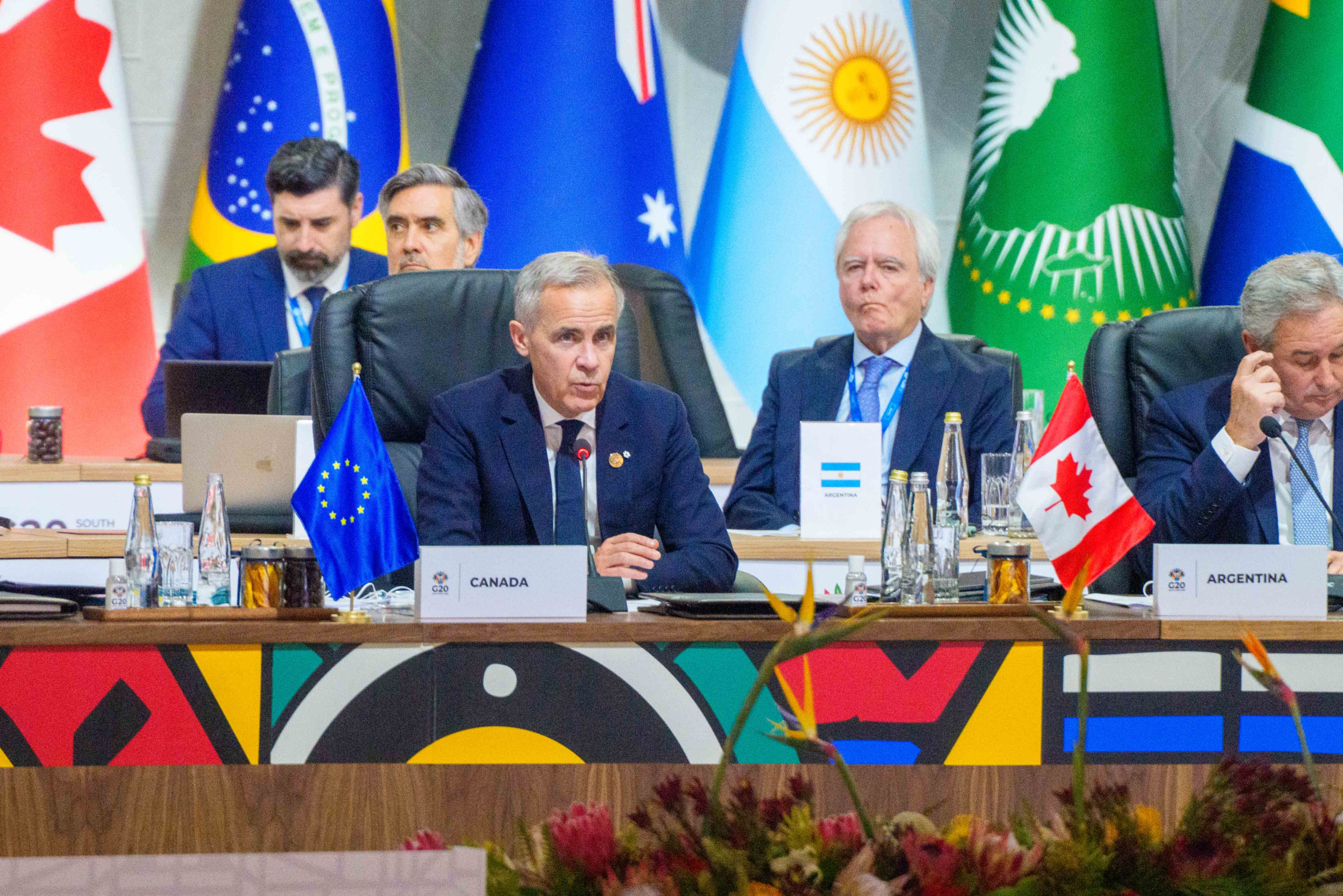
Prime Minister Mark Carney told business leaders at the World Economic Forum today that Canada is abandoning its reliance on the rules-based international order and adopting a new approach he calls “value-based realism.”

Speaking in Davos, Switzerland, Carney said the multilateral system that allowed Canada to pursue values-based foreign policy while benefiting from economic integration no longer functions as advertised. He described the current moment as “a rupture, not a transition” in global affairs.

“We are no longer just relying on the strength of our values, but also the value of our strength,” Carney said.

Economic integration as weapon

Carney said great powers now use economic tools as weapons, turning tariffs into leverage, financial infrastructure into coercion, and supply chains into vulnerabilities to be exploited.

“You cannot live within the lie of mutual benefit through integration, when integration becomes the source of your subordination,” he said.

The prime minister warned that a world where countries retreat into economic fortresses will be “poorer, more fragile and less sustainable.”

Trillion-dollar investments and defense spending

Since taking office, Carney’s government has cut taxes on incomes, capital gains and business investment, and removed all federal barriers to interprovincial trade.

Canada is fast-tracking $1 trillion in investments in energy, artificial intelligence, critical minerals and new trade corridors. The government plans to double defense spending by the end of the decade.

Trade diversification strategy

Canada has signed 12 trade and security deals across four continents in six months. The government recently concluded strategic partnerships with China and Qatar, and is negotiating free trade agreements with India, ASEAN, Thailand and the Philippines.

Carney said Canada agreed to a comprehensive strategic partnership with the European Union, including joining SAFE, the European defense procurement arrangement.

The government is pursuing what Carney called “variable geometry” — different coalitions for different issues based on common values and interests.

Middle powers must act together

Carney urged middle powers to combine forces rather than compete with each other for favor from great powers.

“If we’re not at the table, we’re on the menu,” he said.

He criticized countries that negotiate bilaterally with more powerful nations, saying they “negotiate from weakness” and “accept what’s offered.”

“This is not sovereignty. It’s the performance of sovereignty while accepting subordination,” Carney said.

Canadian advantages

Carney highlighted Canada’s strengths as an energy superpower with vast critical mineral reserves, the most educated population in the world, and sophisticated pension funds that rank among the world’s largest investors.

He said Canada has “immense fiscal capacity to act decisively” and offers stability as “a pluralistic society that works.”

“We are taking the sign out of the window. We know the old order is not coming back,” Carney said. “Nostalgia is not a strategy.”

Related Posts

Leave a Comment