

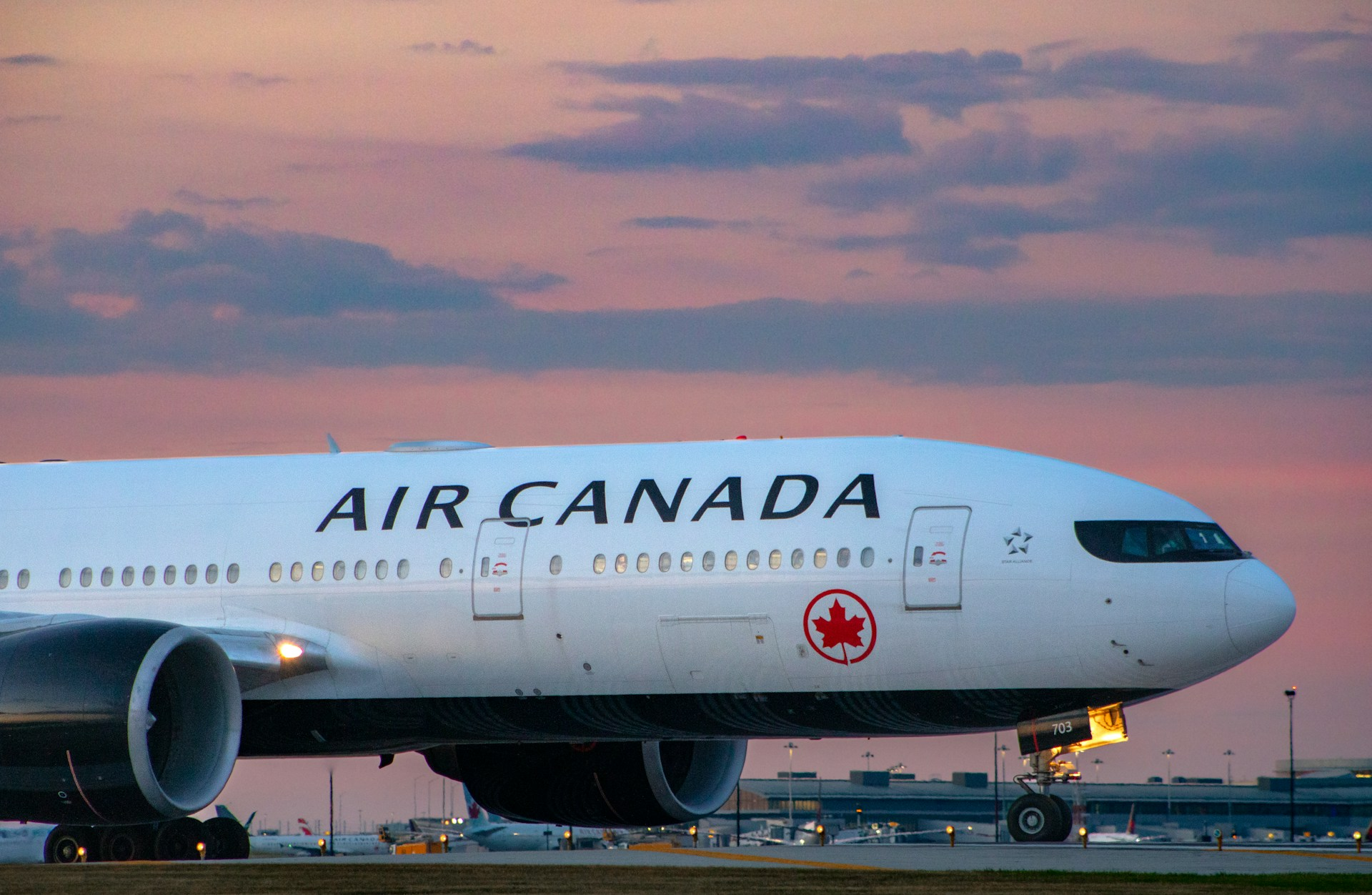
An arbitrator has ruled that Air Canada wrongfully denied religious exemptions from its mandatory COVID-19 vaccination policy to seven pilots, ordering the airline to compensate them for lost income from the period they were placed on unpaid leave.
The ruling, dated March 3, 2026, found that all seven pilots had established a prima facie case of workplace religious discrimination under the collective agreement and the Canadian Human Rights Act.
Background
Air Canada introduced a mandatory COVID-19 vaccination policy in 2021. Employees who sought exemptions on religious grounds were required to submit a written, dated explanation from a religious leader explaining why their faith prevented them from being vaccinated.
Pilots who were granted exemptions at the outset were placed on paid leave while the airline considered possible accommodations. The seven pilots at the centre of this dispute had their exemption requests denied and were placed on unpaid leave as of Oct. 31, 2021.
Following a Step 2 grievance hearing in April 2022, Air Canada granted the exemption requests in May 2022, placing the pilots on unpaid leave with benefits from that date forward. The airline characterized the grievances as resolved. The union disagreed, arguing the pilots were owed compensation for the unpaid period from Oct. 31, 2021 to May 9, 2022. An earlier ruling rejected the union’s position that the Step 2 decision amounted to a concession of error.
The arbitration then proceeded to the discrete question of whether the exemption requests should have been granted at the outset.
The employer’s approach
Air Canada’s accommodation office processed more than 500 exemption requests across multiple bargaining units, all handled by a single manager. The airline said it granted religious accommodations when requests demonstrated both a sincere religious belief and a clear connection between that belief and an inability to be vaccinated.
The employer denied requests it characterized as based on personal preference, freedom of conscience without religious grounding, or scientifically unsound concerns — including fears that COVID-19 vaccines could alter DNA.
The airline also argued that much of the testimony presented at the arbitration hearing was after-the-fact information not available to the decision-maker at the time the requests were evaluated.
The union’s position
The union argued Air Canada misunderstood its obligations under the Canadian Human Rights Act on several fronts. It contended the airline improperly required third-party validation from a religious leader as a precondition to consideration, failed to invite or consider personal explanations from six of the seven pilots, and wrongly dismissed conscience-based objections as personal preference rather than sincerely held religious belief.
The union also argued the airline assessed objections through the lens of scientific validity rather than sincerity, and discounted religious objections where they were accompanied by secular concerns.
The arbitrator’s findings
The arbitrator applied the two-part test from the Supreme Court of Canada’s decision in Syndicat Northcrest v. Amselem, which requires a claimant to show a practice or belief with a nexus to religion, and sincerity of that belief.
The arbitrator found all seven pilots to be credible and their testimony honest. Each described themselves as committed Christians, and each identified religious objections to vaccination — including beliefs about the sanctity of the body, the use of fetal cell lines in vaccine development, and the obligation to follow conscience as a spiritual duty.
“All of their evidence appeared utterly sincere,” the arbitrator found. “It was delivered in deeply personal terms. Their respective will-says were the furthest thing from ‘cookie-cutter.’”
The arbitrator accepted that religious objections raised alongside other concerns — including secular ones — could not be dismissed on that basis alone. “I find that this central objection may not be impaired, undermined or displaced because that religious objection was said to be supported by, or included, other concerns which, standing alone, might be seen as secular-only,” the ruling states.
The arbitrator also found fault with the airline’s requirement that pilots obtain a letter from a religious leader. Citing established jurisprudence, the ruling noted that religious belief is intensely personal and that individual affirmation of belief does not depend on endorsement from a third party.
On the question of post-hearing testimony, the arbitrator rejected the employer’s position that it should be disregarded. The parties had agreed the matter would proceed de novo, with will-say statements and cross-examinations. The pilots’ testimony was admitted and given full weight.
“While hindsight is easy, I find that — if focus had remained on the Amselem baseline ‘subjective religious belief’ requirement without diversion — Air Canada should have allowed their requests for religious exemption from the start,” the arbitrator wrote.
Order
The arbitrator declared that each pilot’s exemption request should have been granted at the outset, and that they should have been placed on paid leave as their colleagues were. Air Canada was directed to compensate the seven pilots within 60 days. The arbitrator retained jurisdiction in the event the calculation of damages becomes an issue.
The duty-to-accommodate aspect of the grievances remains outstanding and will proceed separately.
For more information, see Air Canada v Air Line Pilots’ Association, 2026 CanLII 16803 (CA LA).