


By Claire Rush
An inspection contractor found a chemical tank at a Washington state paper mill “not fit for continued service” 10 months before it failed in May, killing 11 in one of the deadliest U.S. workplace disasters in recent decades, according to a federal report released Friday.
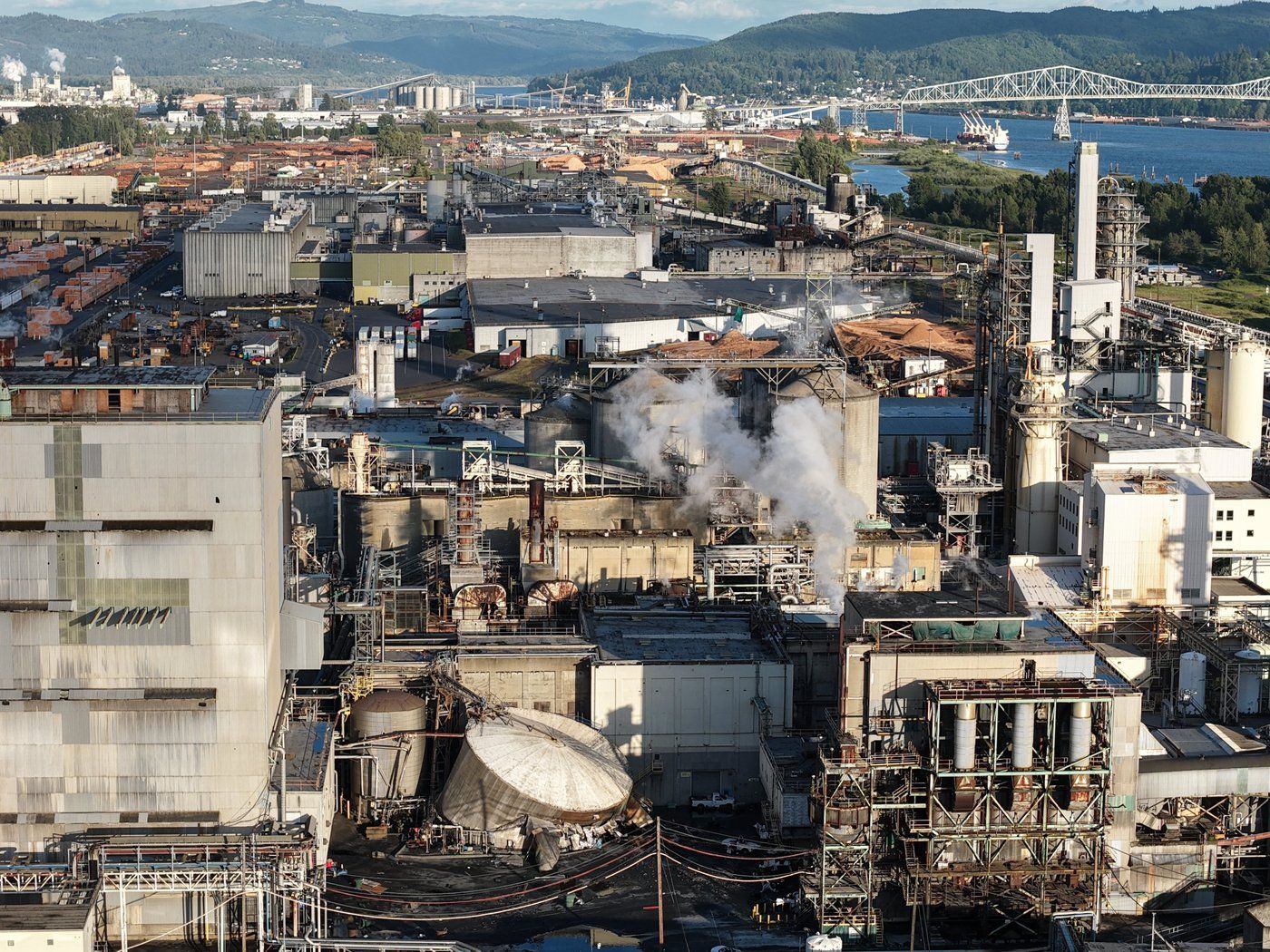
The U.S. Chemical Safety Board’s update about the May 26 failure in Longview, which expelled enough caustic liquid to blow out building walls, is part of an ongoing investigation. The federal agency said it is still determining the cause of the failure.
The board found that the contractor provided Nippon Dynawave Packaging Company with recommendations for internal inspections and shell repairs, but the company did none between a July 2025 inspection and the May 2026 failure.
An email seeking comment was sent to Nippon Dynawave. A person who answered the phone at Nippon’s plant in Longview declined to comment, and a message was left seeking comment.
In July 2025, the contractor found “significant thinning” below the minimum safe thickness in the lower regions of the tank after an external inspection, according to the board’s report. The minimum safe thickness is a threshold that measures a tank’s ability to contain the pressure of the liquid and support the tank’s weight, the report said.
The same contractor inspected the exterior of the tank in October 2025 and February 2026 and both times identified that “large portions of the tank remained thinner than the calculated minimum safe wall thickness.”
“The company also did not remove the tank from operation or derate the tank for reduced service,” the board said.
The tank failure released roughly 900,000 gallons (3.4 million liters) of a liquid known as white liquor that is used to break down wood for making paper products and is capable of causing severe burns. In addition to the workers killed, several others and one firefighter were injured.
In an excerpt of the July 2025 inspection included in the board’s update, the recommendations were noted as “Priority 1: Not fit for continued service unless corrected,” with a “high likelihood/consequence of failure (or) critical code/standard deficiency.”
“Owner should plan to have an internal inspection performed in order to determine the extent of the required repairs. It’s likely that the entire shell course should be replaced,” the inspection excerpt says.
The inspection was completed by Applied Technical Services LLC. The federal report did not specify why the company was conducting the inspections.
The catastrophic failure hit just minutes after employees began arriving around 7 a.m., the board’s report said.
Shortly before 2 a.m., a vessel at the facility called a digestor was removed from service for repairs. As a result, the tank stopped sending white liquor into the digestor. But more white liquor continued to flow into the tank, causing it to approach full capacity around 6:20 a.m. It failed less than an hour later, the report said.
After flooding the courtyard, crushing vehicles and destroying part of one of the surrounding buildings, the liquid flowed into the buildings’ lower floors, where workers were holding morning meetings.
All eight workers in the electrical maintenance shop as well as a worker in the courtyard were killed. In the mechanical maintenance shop, five employees and the foreman escaped, but two were killed from exposure to the chemical, the report said. Two of the people who escaped were seriously injured due to chemical burns.
The company radioed for its medical emergency response team but didn’t explain that white liquor had been released, according to the report. A member of the team waded into a pool of white liquor to try to rescue an employee, thinking it was water, and was seriously injured from chemical burns.
Earlier this week, the Washington Department of Ecology issued notice of 35 environmental violations to Nippon Dynawave. The state agency oversees the facility’s air and water quality permits and compliance with environmental waste laws.
The board said its investigation is ongoing and that its complete findings will be included in its final investigation report.
___
Associated Press writer Hallie Golden contributed to this report.