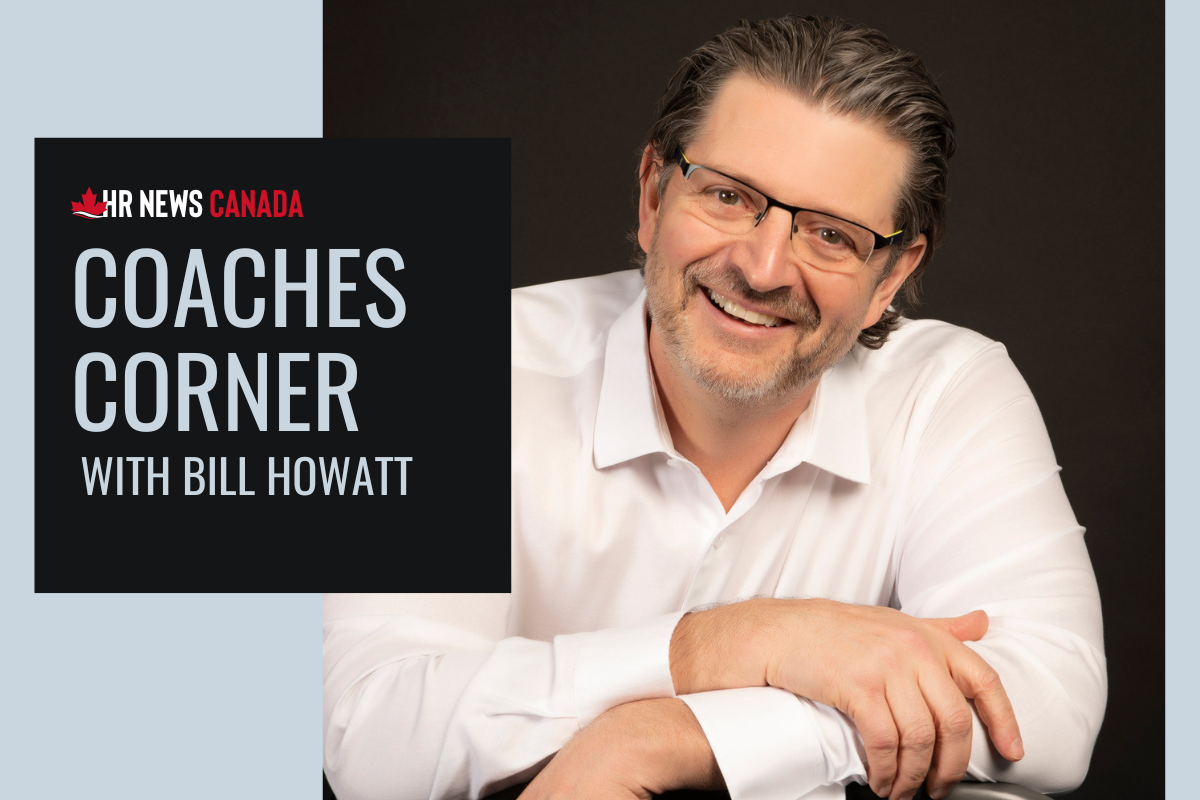
Home FeaturedCoaches Corner: Practical guidance for workplace challenges

Coaches Corner: Practical guidance for workplace challenges

by Bill Howatt
A+A-
Reset

Leaders and HR professionals face unprecedented complexity in today’s workplaces. Rising mental health risks, increasing performance pressures and shifting expectations around OHS, human rights, labour standards and psychological health and safety (PHS) have created a new reality. Leaders are no longer responsible only for results; they are responsible for the conditions under which results are achieved.

And yet, despite this shift, many leaders feel unprepared.

They want to support employees.

They want to lead well.

They want to reduce risk and build healthier teams.

But they often aren’t sure how.

That is why we are launching the Coaches Corner series — a practical, applied set of articles that combine coaching skills, PHS principles and leadership practices to help leaders confidently navigate real-world workplace challenges.

This isn’t theory.

This isn’t academic.

This is hands-on guidance that leaders can use immediately.

Why this series matters now

Across Canada and globally, we live in a time of uncertainty as a new world order is being defined. The pressure of running a successful organization and leading teams is evolving.

At the same time, leaders are expected to solve increasingly complex people problems, including:

  • An employee showing signs of burnout
  • A team conflict that’s beginning to escalate
  • A performance decline that might have a mental health component
  • A discipline issue that requires fairness and compassion
  • A high-performing employee whose behaviour is eroding trust
  • A remote worker becoming disengaged or isolated
  • A frontline supervisor unsure how to address emotional reactions in their team
  • Psychologically unsafe behaviour showing up in a meeting

These situations require more than good intentions. They require skills — coaching skills, conversational skills and PHS literacy.

That is the focus of this series.

What you can expect from each article

Each article in the Coaches Corner series will follow a consistent, high-impact structure:

A realistic workplace scenario — We’ll start by presenting a relatable, challenging moment leaders often face but don’t always feel confident navigating.

Examples include:

  • A manager noticing an employee withdrawing and becoming reactive
  • Two team members engaged in repeated conflict
  • A high-potential employee suddenly missing a deadline
  • A supervisor who needs to have a difficult conversation about conduct
  • A leader unsure whether a situation is a performance issue, a crisis signal or both

The goal is to anchor learning in real experiences.

What’s going on beneath the surface — We’ll break down what the leader is facing:

  • A performance target challenge
  • A behavioural challenge
  • Psychological risks
  • Financial pressure
  • Power dynamics
  • System pressures
  • Change

Leaders often respond to what they see, but what matters more is what is influencing the behaviour.

Coaching lens: What to consider before acting — This section will bring in core coaching principles:

  • What to observe
  • Questions to clarify assumptions
  • How to prepare for the conversation
  • What to avoid (common missteps)
  • How to create psychological safety before engaging

Leaders typically don’t need more tactics; they need better thinking.

All articles will be written through a leadership-coaching lens that supports discovery, learning and growth. They will approach workplace challenges with a focus on curiosity, collaboration and human development to help leaders strengthen their ability to guide conversations that unlock insight, build trust and support employee growth while navigating organizational expectations with clarity and confidence.

Through this lens, leaders will be encouraged to explore:

  • What’s underneath the behaviour — the emotional, interpersonal and situational factors influencing how an employee shows up
  • How to stay curious rather than reactive, using coaching questions to gain clarity before acting
  • How to prepare for meaningful conversations, emphasizing empathy, listening and transparency
  • How to co-create solutions, encouraging shared ownership, accountability and growth
  • How coaching moments shape culture, modelling the leadership behaviours that foster trust, engagement and psychological safety

While the articles will acknowledge relevant PHS considerations, the emphasis will be on helping leaders think and act like effective coaches — supporting employees in ways that encourage learning over judgment, collaboration over control, and growth over compliance.

The goal is to strengthen leaders’ ability to respond to challenges in ways that are supportive, respectful and developmental, creating conditions where employees feel safe to reflect, participate and improve.

This approach helps leaders build the mindset and skill set required to support employees effectively, strengthen team culture and create work environments where people feel heard, supported and empowered to grow.

Practical application: How to approach coaching — This is where the guidance becomes actionable. Keeping in mind that there is more than one way to coach different situations, each article will provide an example that the reader can consider when coaching and solving a challenge or situation they are facing.

We’ll walk through:

  • A sample coaching approach
  • Key questions to ask an employee
  • How to frame an issue with clarity and care
  • How to set boundaries and expectations
  • How to document and follow up
  • When to escalate and to whom
  • How to integrate coaching into PHS practices (policies, reporting, role clarity, etc.)

The goal is simple: give leaders a repeatable roadmap they can apply tomorrow.

Why this isn’t just another leadership series

Most leadership content tells leaders what to do.

This series will show them how.

Many coaching articles provide guidance; this series will make it practical and operational. Most coaching content focuses on “empowerment conversations.” This series will integrate coaching with PHS, risk awareness and organizational realities.

By combining the disciplines of coaching, PHS and leadership, we will give leaders the most relevant set of tools for today’s workplace.

Call to action: Submit your scenarios

We want this series to be shaped by real questions from real workplaces.

If you’re a leader, HR professional, OHS practitioner, union representative or internal PHS champion, we invite you to submit scenarios or challenges you’d like addressed.

It could be something you’re experiencing now or a situation you’d like to be better prepared for.

Your scenario may be selected for a future article (confidentially and with no identifying details).

Submit your questions or scenarios to: [email protected]

The modern workplace requires leaders who can think clearly, respond skilfully and act in ways that support performance and psychological safety. This new series is designed to help leaders build those capabilities one scenario at a time.

We look forward to supporting your learning and helping you strengthen the conditions in which people work, grow and thrive.

Related Posts

Leave a Comment