


Home Diversity, Equity & InclusionEmployment lawyer urges people leaders to distinguish discomfort from discrimination

Employment lawyer urges people leaders to distinguish discomfort from discrimination

by Todd Humber
A+A-
Reset

An employment and human rights lawyer is calling on workplace leaders to recognize that employee discomfort does not automatically signal legal violations, warning that misunderstanding this distinction undermines both legitimate diversity efforts and effective management.

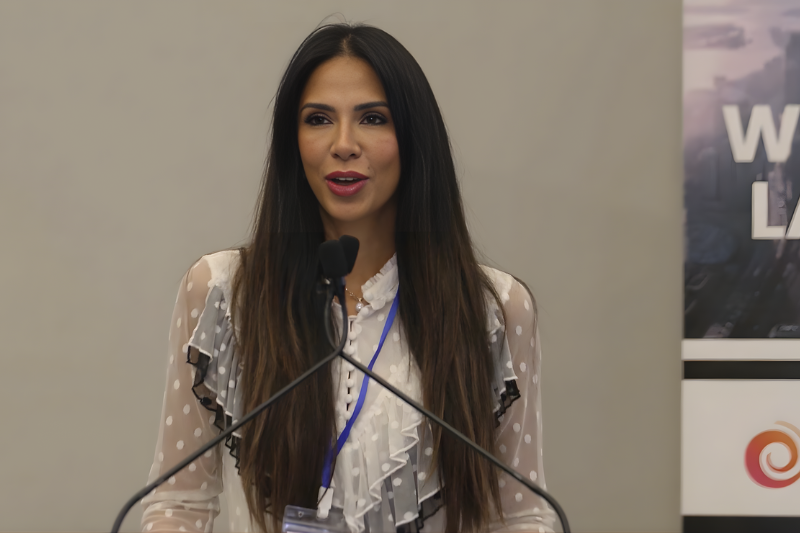
Muneeza Sheik, founding partner of Muneeza Sheik Law in Toronto, told attendees at Workplace Law Talks 2025 that organizations frequently conflate uncomfortable workplace situations with harassment or discrimination, creating confusion about legal obligations and employee rights. The conference was co-presented by HR News Canada and HR Law Canada.

“Things make us uncomfortable all the time,” said Sheik, who has practiced employment law for 19 years. “Just because you’re uncomfortable does not necessarily mean that there’s something improper or untoward, legally untoward, happening.”

She asked the employment lawyers in the room to raise their hands if they had dealt with clients — either employees or employers — who outlined factors claiming harassment or toxicity when the actual legal assessment was simply that the situation was uncomfortable. Multiple hands went up.

Performance management creates discomfort

Sheik used performance management as an example of necessary workplace discomfort. When people leaders speak to employees about poor performance, it probably makes those employees uncomfortable, she said, but that discomfort does not make the conversation improper.

The distinction matters because speech that crosses into harassment, hate or discrimination differs fundamentally from speech that simply makes someone uncomfortable, according to Sheik.

“That is different from speech that makes you uncomfortable,” she said.

Freedom of thought versus freedom of expression

Sheik addressed the tension between protecting diverse viewpoints and maintaining workplace standards, particularly around politically charged topics. She noted that while freedom of thought and expression are protected by the Canadian Charter of Rights and Freedoms and human rights legislation, these protections have limits in the workplace.

Employees have the right to hold beliefs and opinions — even unpopular ones — without fear of reprisal, provided those beliefs don’t cross into harassment, hate or discrimination, she said. However, their right to express those views, especially contentious ones, is not absolute.

“While there’s nothing you can do as a people leader to prevent employees from holding certain views, their right to express those views, especially when the views are contentious, is not absolute,” Sheik said.

She consistently advises clients that employers can implement workplace policies reasonably connected to business objectives and can apply those policies to restrict speech where appropriate, provided they apply them consistently across the board.

Political discussions require consistent policies

Sheik pointed to debates about Middle East politics as a significant recent example where employees with opposing views wanted their employers to allow them to express certain positions in the workplace. She has seen employers take action against employees or silence them for holding certain beliefs.

As a people leader, organizations cannot muzzle opinions they dislike or that don’t align with their own views while amplifying or allowing opinions they agree with to permeate the workplace, she said. Doing so creates liability exposure.

“I often advise my clients, when I speak to people leaders like you individually, that, for instance, when looking at polarizing political discussion, it’s probably better to simply advise your employees not to have that conversation in the workplace at all,” Sheik said. “I find that usually works best.”

Accommodation requires deeper understanding

Sheik urged people leaders to move beyond what she called “Tier 1 accommodations” — straightforward situations where someone is unwell or requires time off for health reasons. The more challenging scenarios involve accommodations intertwined with cultural traditions and practices that are not mainstream.

She shared examples from recent cases in her practice, including South Asian families with elder care responsibilities where parents live with adult children, employees requesting two hours off every Friday for religious prayers despite taking the same lunches and breaks as other employees, and requests for religious pilgrimages.

“I’m not suggesting to you, even for a moment, that in every single one of these scenarios, you have a legal obligation as an employer, as a people leader, to accommodate,” Sheik said. “But what I am suggesting to you is you must lean in and ask the right questions to understand what an accommodation is.”

She cited a 2024 Human Rights Tribunal of Ontario decision, Bueno v. Energy Call Solutions Inc., where the tribunal found the employer discriminated against a Muslim employee based on creed when she was terminated the day after being interrupted while praying at work.

Another 2024 tribunal decision, Constantino v. Okta Pharma Canada, found discrimination when an employer refused to meaningfully discuss or explore accommodations for a long-term health and sales representative who requested to continue working from home to care for her elderly mother with cancer and her young son during the COVID-19 pandemic, despite previously allowing work from home.

The fake diversity problem

Sheik introduced the concept of “fake diversity,” which she said occurs when organizations place women or historically marginalized employees in visible roles for promotional purposes without genuine commitment to inclusion.

“Fake diversity often looks like real diversity,” she said. “That is, until that woman or that other employee who disproportionately deals with differential treatment in the workplace brings their experience to the table to try to embody change.”

Organizations practicing fake diversity have almost no regard for celebrating female thinkers or those historically marginalized in the workplace, instead relegating them to promotional DEI material, according to Sheik. She has represented employees who report complaints against them spiraling out of control while their male counterparts enjoy cover-ups of far more egregious misconduct.

She emphasized that how people leaders handle such issues affects workplace culture beyond individual situations.

“People are watching you,” Sheik said. “People are looking to see how you are going to handle the issue. And if you handle it in a way that does not take into consideration many of the nuanced concepts I’ve talked about, it is something that is going to permeate through your workplace culture.”

Responding to DEI criticism

When asked whether diversity and inclusion efforts have gone too far — with some people leaders fearing they will make mistakes — Sheik said the answer depends on implementation quality.

If a diversity or DEI mandate is thoughtful and implemented in good faith, it should not foster fear among employees or people leaders about raising opinions or addressing issues, she said. However, if it’s fake diversity, employees can assume their employer probably won’t treat them fairly either.

“I think where it’s consciously done, where it’s implemented in good faith, and it’s not perfect, right? I mean, again, organizations are humans, and humans are imperfect, and it takes time to find your way through these things,” Sheik said. “If it’s implemented in good faith, it’ll all sort itself out in the end.”

On U.S. rollbacks of DEI initiatives affecting Canadian organizations, Sheik noted Canada’s human rights legislation is “quite superior” not just compared to the United States but on the world stage. The challenge arises with larger employers where Canadian operations report to U.S. headquarters.

“It absolutely does have an impact, and it is a challenge,” she said.

Related Posts

Leave a Comment