


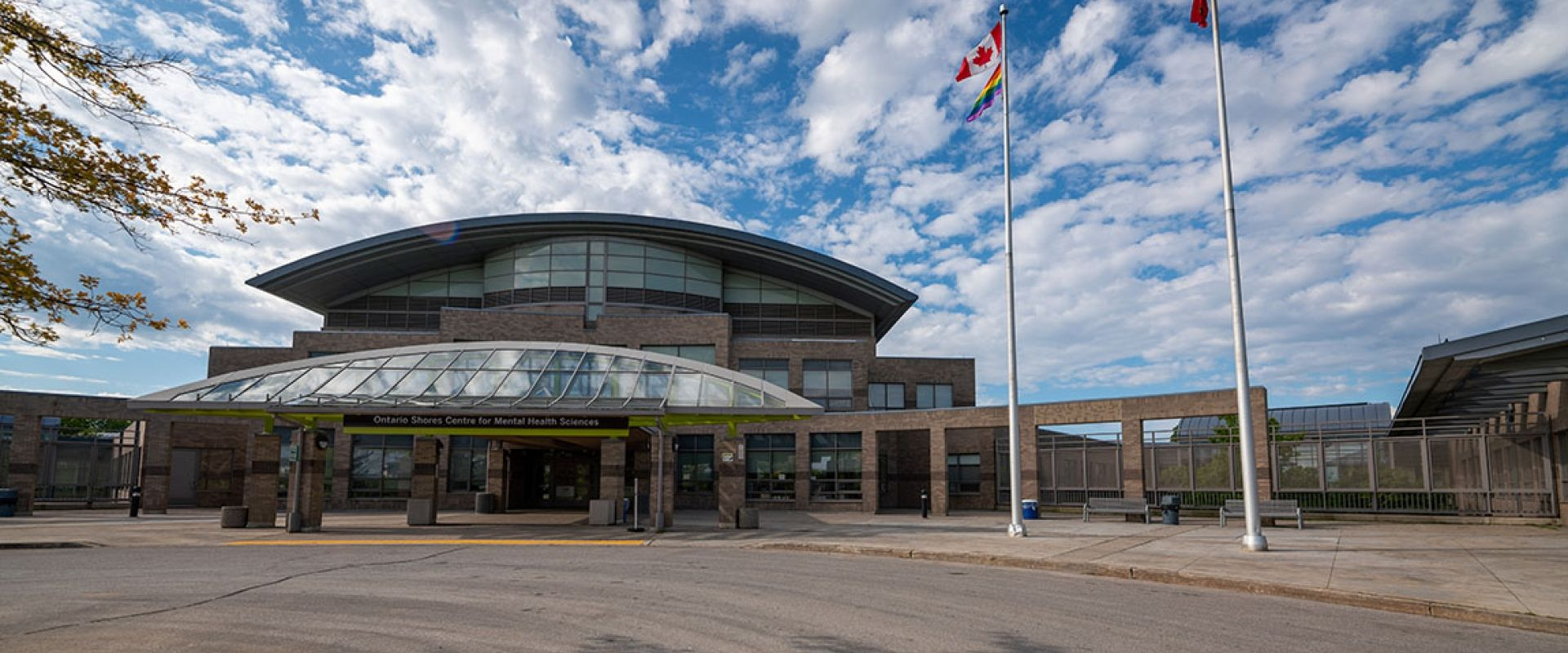
An arbitration board has awarded employees at Ontario Shores Centre for Mental Health Sciences general wage increases of 3.0 per cent in 2025 and 2.25 per cent in 2026, along with adjustments to several classifications and benefits, after the parties failed to reach a renewal collective agreement before their March 31, 2025 expiry date.
The award, issued February 18, 2026 under the Hospital Labour Disputes Arbitration Act, covers 1,189 unionized employees across three bargaining units — registered nurses, paramedical and professional staff including registered practical nurses, and office, clerical, service and maintenance workers — at the Whitby, Ontario mental health hospital.
Wage increases and a re-opener
The central dispute concerned the appropriate general wage increases for the two-year term running April 1, 2025 to March 31, 2027. The union argued the parties have historically followed the bargaining pattern set at the OPSEU central hospital table, and proposed a “me too” clause that would tie the award to whatever outcome emerged from ongoing central negotiations.
The employer proposed increases of 2.0 per cent in 2025 and 1.75 per cent in 2026, and pointed to other mental health hospitals — including the Centre for Addiction and Mental Health, Waypoint, and Royal Ottawa Hospital — as the appropriate comparators.
The board declined to rule on whether the parties have historically followed the OPSEU central pattern, but found it appropriate to award increases consistent with known central hospital outcomes. The ONA, CUPE, and SEIU central agreements had established increases of 3.0 per cent in 2025 and 2.25 per cent in 2026 with the participating hospitals, and the board awarded the same figures.
Given the relevance of the still-unresolved OPSEU central agreement, the board granted a re-opener allowing either party to seek further consideration of general wage increases if the OPSEU central outcome differs from what was awarded.
Classification wages
The previous arbitration board had established Tradesperson I, II, and III classifications but left their wage rates to be negotiated in the next round. With the parties unable to agree, the board set the rates. The employer’s proposals for Tradesperson I and II were accepted, while the Tradesperson III rate — covering electricians, plumbers, and HVAC technicians — was set at a level consistent with the average of the comparators presented by both parties.
The board also awarded a $1.00-per-hour adjustment to the top rate for occupational therapists, continuing what the previous arbitration board had described as a gradual narrowing of a compensation gap relative to comparators. The previous board had already awarded a $1.00 adjustment and acknowledged “more needs to be done to ensure comparability in the next round.” The same $1.00 adjustment was extended to the behaviour analyst classification to maintain parity with occupational therapists.

Part-time vacation and benefits
The board made incremental improvements to vacation pay for part-time employees, who had previously been entitled only to what is required under the Employment Standards Act, 2000. The board described the existing entitlements as “sub-normative” and introduced a tiered vacation pay structure based on hours of continuous service, rising from four per cent to a maximum of 10 per cent.
A new health care spending account was awarded for full-time employees, effective March 31, 2026, providing $500 annually with the employer contributing 75 per cent of billed premiums and employees contributing 25 per cent. The meal allowance was also increased from $6 to $10.
Overtime and telephone consultation
The employer sought to eliminate an existing entitlement to overtime pay for any work performed on a scheduled day off, regardless of the circumstances. The board agreed the current provision was not normative and awarded modified language. Under the new terms, work on a scheduled day off will not attract overtime if the employee requested the day off and worked to cover it, volunteered to pick up additional shifts, or exchanged shifts with another employee.
New language was also introduced governing telephone consultations by professional and trades employees on standby. Employees providing professional or trades services by phone without returning to the hospital are entitled to a minimum of 15 minutes’ pay for calls received between 7 a.m. and 11 p.m., and 30 minutes’ pay for calls between 11 p.m. and 7 a.m., at twice their regular straight-time rate.
Retroactivity on wage increases is to be paid within four full pay periods from the date of the award, based on hours paid.
Both union and employer nominees issued partial dissents.
For more information, see Ontario Public Service Employees Union, Local 331 v Ontario Shores Centre for Mental Health Sciences, 2026 CanLII 13008 (ON LA).
