


By Radha Agarwal | Delta Optimist
For the British Columbia Nurses’ Union (BCNU), the upcoming strike vote on Friday, May 8 is a matter of survival, for both patients and themselves.
BCNU South Fraser Valley Regional Chair Peggy Holton stresses that patient mortality risk climbs by seven per cent for every person a nurse must care for beyond the 1:4 ratio.
Beyond staffing, she says a “hands-off” security model leaves nurses physically vulnerable, forced to personally manage violent confrontations involving weapons while security is restricted from taking action.
“I’ve been nursing for 44 years. I love the profession, and I still do. But there are times where you almost drop to your knees and go, ‘I don’t know if I can do this anymore,’” said Holton.
Fraser Health defends its “Relational Security” model, stating that while teams are trained to prioritize de-escalation, they are authorized to physically intervene if a situation becomes threatening.
However, for the nurses Holton represents, these protocols have not stopped a dangerous trend of vulnerability.
She argues that de-escalation training often fails to account for split-second aggression, leaving staff to face immediate physical risks alone while security is bound by a more restricted mandate.
The Bargaining Impasse
The tension comes as 55,000 BCNU members prepare to cast a strike vote between May 8 and 11.
After eight months at the table, the Nurses’ Bargaining Association declared an impasse in April.
Holton claims the Health Employers Association of BC (HEABC) has rejected 94 per cent of the union’s 140 proposals.
“They want to take away the benefits that actually keep nurses working,” she said, citing access to therapies for injured staff as a major sticking point.
The HEABC called the pause in negotiations a “normal part of the collective bargaining process.”
It also noted that “B.C. has robust essential services requirements for the health sector to prevent immediate and serious danger to the health of the public in the case of any job action.”
The employer representative maintained that negotiations are best kept to the bargaining table to find “mutually beneficial” solutions that also support the government’s key priorities.
“Vicious Cycle” at Delta Hospital
The crisis is also being felt at Delta Hospital, where Holton describes a “vicious circle” of care.
She says a lack of resources means patients arrive sicker and stay longer.
“I recently walked through Delta. There’s hallway beds everywhere, on every unit, every floor in Emerge,” Holton said. “We are sort of giving substandard care at times because there’s no place else to put them. You don’t have time to plan a proper discharge home… Patients become like an assembly line. You’re sending people home knowing they’re going to fail and come back,” she added.
Fraser Health says using “alternate care spaces,” such as hallways, vacant surgical beds, and outpatient areas, during high volumes helps optimize available space.
Inside the Emergency Department, Holton warned that a shortage of specialized ER nurses forces medical-surgical staff to work beyond their scope.
When a “CTAS 1” patient requires resuscitation, she says every available nurse is pulled away, leaving the rest of the department vulnerable.
Fraser Health countered this, stating they are “consistently meeting baseline nursing staffing levels” in Delta’s ER.
The authority noted that over the past 17 months, it has hired 12 new Emergency Room Qualified (ERQ) nurses and two physicians for the site, with more nurses currently in training.
The road ahead

Despite new hires, Holton sees a generational crisis: new graduates are leaving the profession within five years.
“They realize this isn’t what they signed up for, and they leave,” she said.
Retention measures must keep pace with hiring efforts.
The upcoming strike vote is intended to send a clear message to the provincial government.
“We want to show them we’re serious about wanting better workplace standards,” Holton said. “We are serious about the impact this has on our patients. We need to do better.”
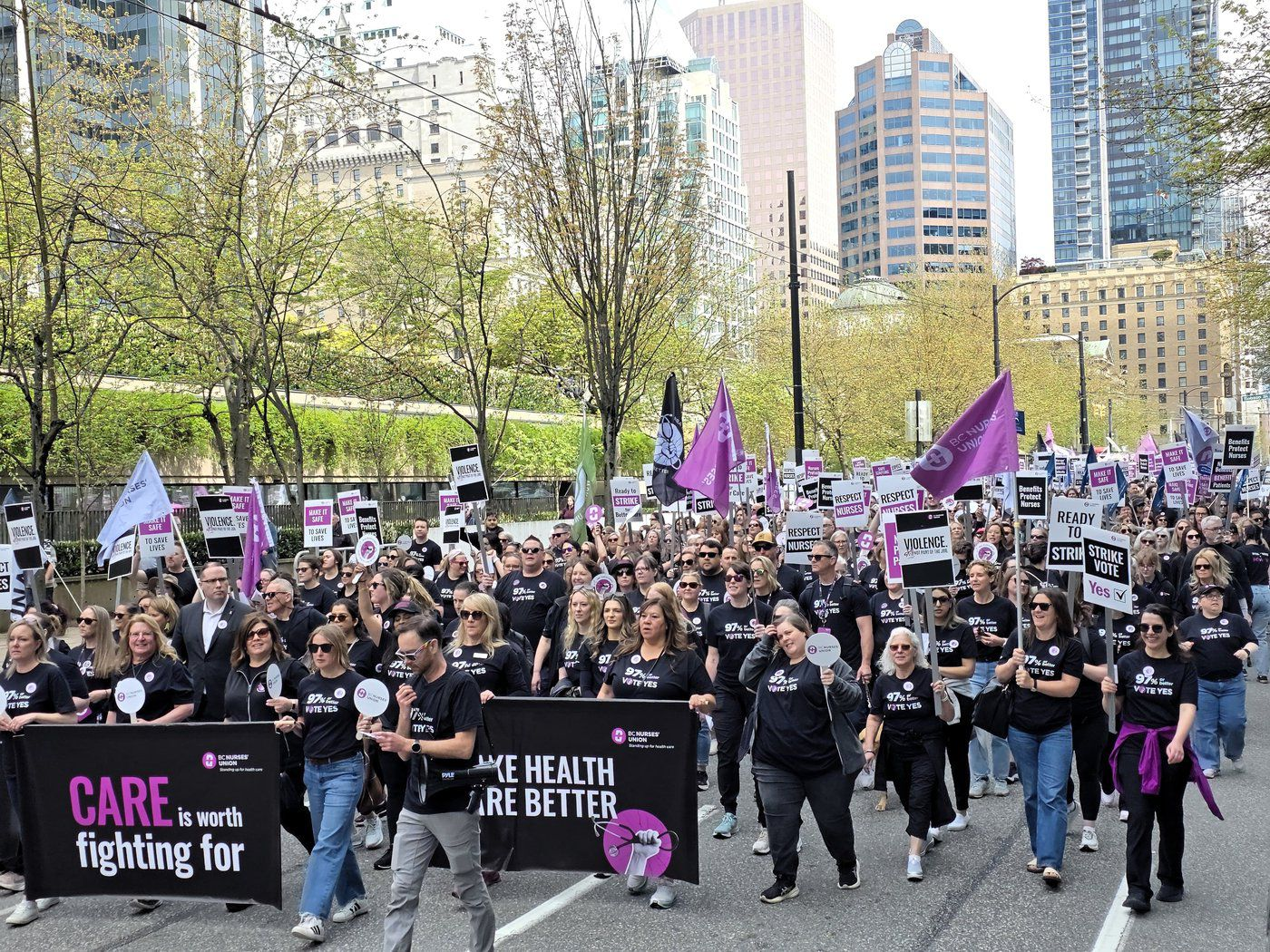
The momentum for the nurses’ mandate was visible last Thursday, when more than 550 nurses and health-care workers rallied in Downtown Vancouver.


