Canada’s manufacturing sector recorded $931.2 billion in total revenue in 2024, down 0.9% from the previous year and marking the first decline after three consecutive years of growth, according to Statistics Canada.
Revenue from manufactured goods, which represented 93.9% of total revenue, fell 1.1% to $874.6 billion. Of the 21 manufacturing subsectors, 11 saw decreases in revenue from manufactured goods, eight experienced increases and two remained stable.
The decline affects workforce planning and economic outlook for employers across Canada’s industrial sector, particularly in Ontario where transportation equipment manufacturing drove most of the decrease.
Transportation equipment sees steepest drop
Transportation equipment manufacturing recorded the largest decrease among subsectors, falling $8 billion. Petroleum and coal product manufacturing followed with a $5.5 billion decline.
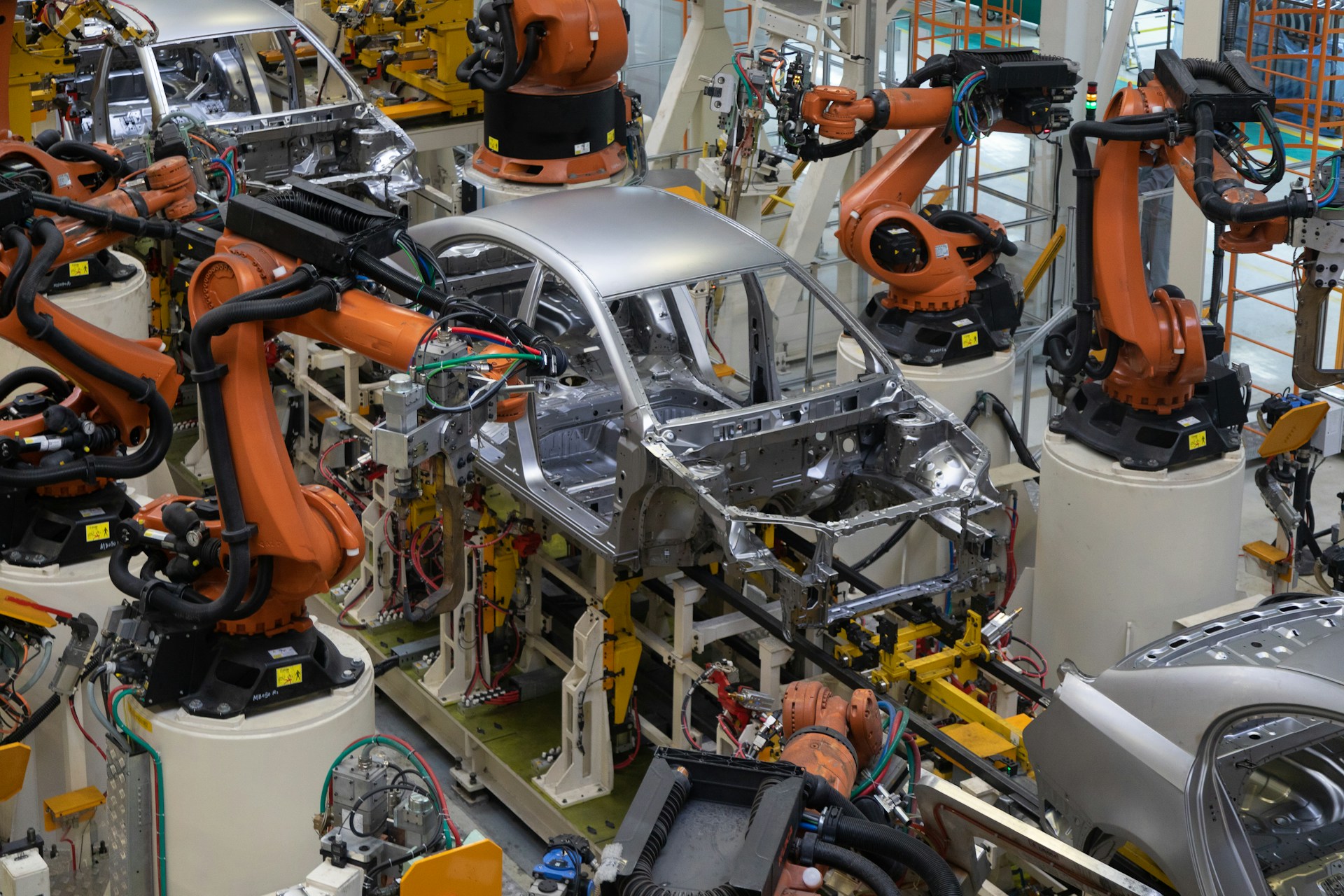
The transportation equipment subsector’s 5.3% decline to $143.7 billion came after two consecutive years of growth. Motor vehicle manufacturing dropped $8 billion and motor vehicle parts manufacturing fell $2.1 billion, attributable to a 12.7% decrease in domestic exports of passenger cars and light trucks.
Aerospace product and parts manufacturing partially offset the decline with a $3.3 billion increase, driven by a 10.7% rise in domestic exports of aircraft, aircraft engines and aerospace equipment.
Food manufacturing leads all subsectors
Food manufacturing claimed the top position for the fifth consecutive year, accounting for 18.4% of all manufacturing revenue. The subsector grew 2.2% to $160.7 billion, marking its 19th straight year of growth.
Animal slaughtering and processing recorded the largest increase at $1.3 billion, while animal food manufacturing saw the biggest decrease at $1 billion.
Ontario experiences largest provincial decline
In Ontario, 15 of 21 manufacturing subsectors saw revenue from manufactured goods decline in 2024. Transportation equipment dropped $11.1 billion, accounting for 72.5% of the province’s overall decrease in manufactured goods revenue.
Petroleum and coal product manufacturing fell $1.9 billion and machinery manufacturing declined $1.5 billion in Ontario. Increases in electrical equipment, appliance and component manufacturing ($1 billion), chemical manufacturing ($700 million) and beverage and tobacco manufacturing ($600 million) partially offset the declines.
Alberta posts strongest provincial growth
Alberta recorded the largest provincial gain, with revenue from goods manufactured growing 1.3% to $103.9 billion. Food manufacturing drove the increase, rising 10.3% or $2.4 billion.
Quebec’s manufacturing sector increased 0.4% to $228.1 billion. Primary metal manufacturing added $1.5 billion and transportation equipment manufacturing grew $1.3 billion, while petroleum and coal product manufacturing declined $1.6 billion.
Expenses decline at slower rate than revenue
Total expenses of manufacturers declined 0.5% to $840.6 billion in 2024. For every dollar of total revenue, manufacturers had 90 cents in total expenses, a ratio largely unchanged since 2022.
Chemical and non-metallic mineral product manufacturing were the most profitable subsectors, each incurring 85 cents in expenses for every dollar of revenue. Transportation equipment manufacturing had the highest expense ratio at 96 cents per dollar.
Costs of materials and supplies declined 2.2% to $541.5 billion. Manufacturers spent an average of 62 cents on materials and supplies for every dollar earned in revenue from goods manufactured.
Salary costs rise despite revenue decline
Total salaries and wages increased 2.8% to $112.9 billion. Manufacturers spent an average of 13 cents on salaries and wages for every dollar earned in revenue from goods manufactured.
Apparel manufacturing spent the most on salaries and wages at 31 cents per dollar of revenue, followed by leather and allied product manufacturing at 29 cents. Petroleum and coal product manufacturing spent the least at two cents per dollar.