There is a moment in many labour disputes when management exhales. The facility is closed. The workers are gone. The equipment is silent. The hardest decision has been made, and in the cold logic of balance sheets, it was the right one. Move on.
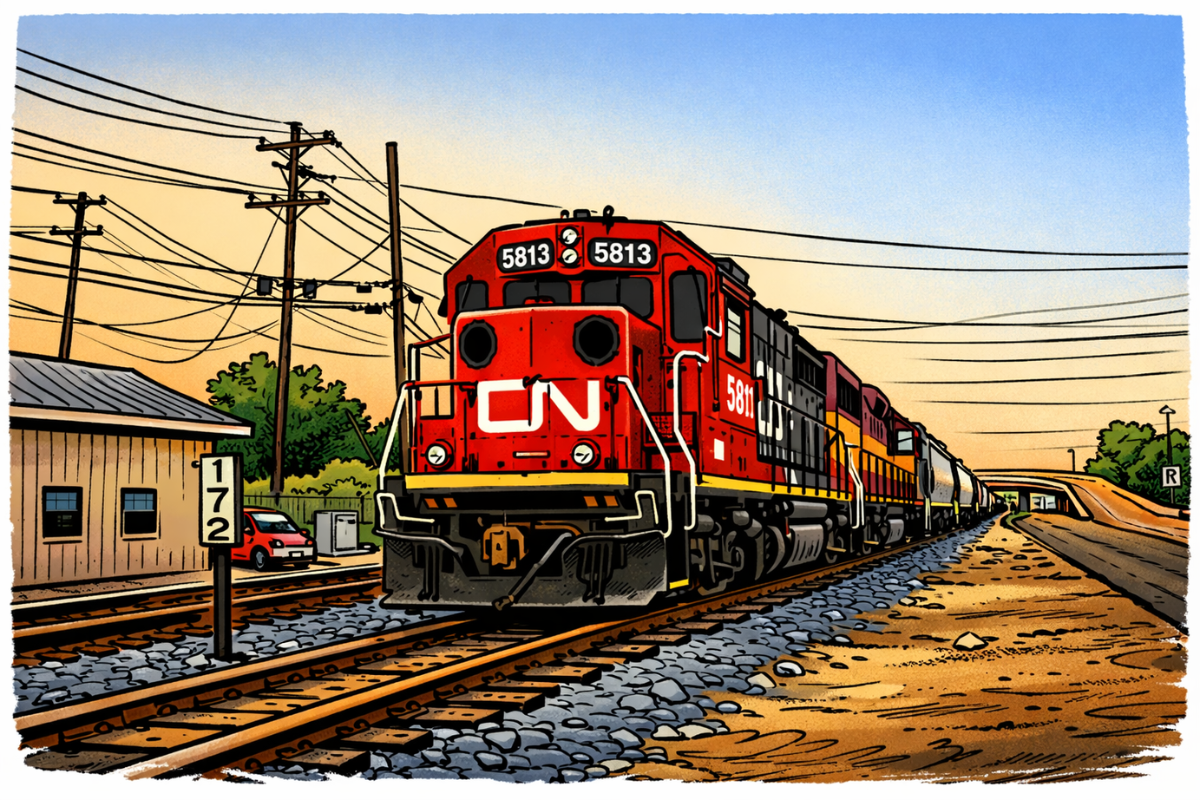
CN Railway had that moment in May 2020, when it shuttered three shops at its Transcona, Man., facility — the Wheel Shop, the Traction Motor Shop, and the Air Brake Shop. The work would be contracted out. The bargaining unit employees would be laid off. That was that.
Except it wasn’t.
On March 3, 2026 — nearly six years later — an arbitrator ordered CN to reopen the Wheel Shop, hire at least 20 new employees, restore production to pre-closure levels, and compensate 28 workers for nearly a year of layoff. The company must also deliver a detailed startup plan within 30 days, submit to a joint oversight committee, and report progress monthly.
Labour arbitrators order reinstatement all the time. An unjust dismissal, a wrongful discipline, a termination without just cause — these are the daily currency of grievance arbitration in Canada. An employee gets their job back. That remedy is well-worn, well-understood, and almost reflexive in the unionized context.
This is something else entirely.
An arbitrator ordered a major Canadian corporation to rebuild something it had already dismantled. Not to pay a fine. Not to reinstate a single aggrieved worker. To reopen a facility, staff it, hit production targets, and prove it’s working — month after month, under the watch of a joint committee with the authority to escalate to expedited arbitration if things go sideways.
The anatomy of a remedy
The 2024 ruling that preceded this one found CN had breached Rule 51 of its collective agreement with Unifor Local 100 — the provision governing the contracting out of bargaining unit work. The arbitrator was clear that the violations were “substantive, and not merely technical.” That distinction matters. Technical breaches often get fines. Substantive ones get orders.
The supplementary award issued is the remedial chapter. And it reads less like a legal document than a project management plan — written by someone with authority to enforce it.
For the Wheel Shop, the arbitrator prescribed not just a reopening but a structured comeback: production targets, procurement timelines, building modifications, a list of machinery to be refurbished. A joint committee with named participants. Monthly check-ins. An expedited arbitration mechanism if things fall apart.
For the Air Brake and Traction Motor Shops, the arbitrator accepted the economic reality that reopening wasn’t feasible. But that acknowledgment came with a price: CN must now perform 85 per cent of its heavy bad order locomotive work in-house using bargaining unit employees, provide monthly reports to the union, grant the union access to its internal reporting systems, and face direct financial penalties if it misses the threshold for two consecutive months.
The penalty structure alone is worth a close look. An overhaul contracted out improperly? That’s 296 hours at collective agreement rates, paid directly to workers. A heavy wreck sent outside? Three hundred and twenty hours. The system is designed to make compliance cheaper than non-compliance — a financial incentive built into the remedy itself.
The quiet power in the room
Labour arbitrators in Canada operate in relative obscurity. They’re not judges. Their decisions don’t trend on social media. Business leaders who have never been on the losing end of a significant arbitration award sometimes underestimate what these proceedings can produce.
This ruling is a useful corrective to that assumption.
Arbitrators derive their authority from collective agreements. But those agreements, negotiated word by word over years of bargaining, can contain extraordinary remedial power. The arbitrator in this case noted that the parties had agreed, during the remedial hearing, “to allow me to fashion a remedy that would appropriately balance the various interests.” That latitude, once granted, produced something CN’s legal and management teams likely did not anticipate when the Transcona shops went dark in 2020.
It’s worth pausing on what “balancing interests” actually meant here. The company’s economic interest was acknowledged — the arbitrator accepted that reopening the Air Brake and Traction Motor Shops wasn’t viable. But the workers’ interest in continued employment, the union’s interest in preserving bargaining unit work, and the agreement’s interest in meaning what it says all landed on the scale too. The remedy reflects all of them.
What this means beyond Transcona
CN is not a small company. It operates one of the largest rail networks in North America, employs tens of thousands of people, and has a legal department with resources most organizations can only imagine. And yet here it is, ordered to rebuild a wheel shop according to a timeline set by an arbitrator.
For HR leaders and business executives, the point isn’t that contracting out is wrong or that operational decisions can’t be made. Companies restructure. Facilities close. That is the reality of commerce.
The point is more subtle, and more important: the decision to close something is rarely the end of the story when a collective agreement is in place. Those agreements have teeth — sometimes longer and sharper than anyone around the boardroom table anticipated. Due diligence before a closure, genuine engagement with the union before the equipment goes cold, a real examination of alternatives. These aren’t just good labour relations practices. They are risk management.
CN’s Transcona shops closed in the spring of 2020. Six years later, the company is being ordered to turn the lights back on.
Someone, somewhere along the way, thought the hard part was over.
For more information, see full coverage of this ruling in HR Law Canada here.